Originally Published: November 24, 2025 | Last Updated: March 4, 2026
E-commerce AI Visibility 2026: Agentic Commerce, ChatGPT Shopping, Perplexity, and Amazon Rufus
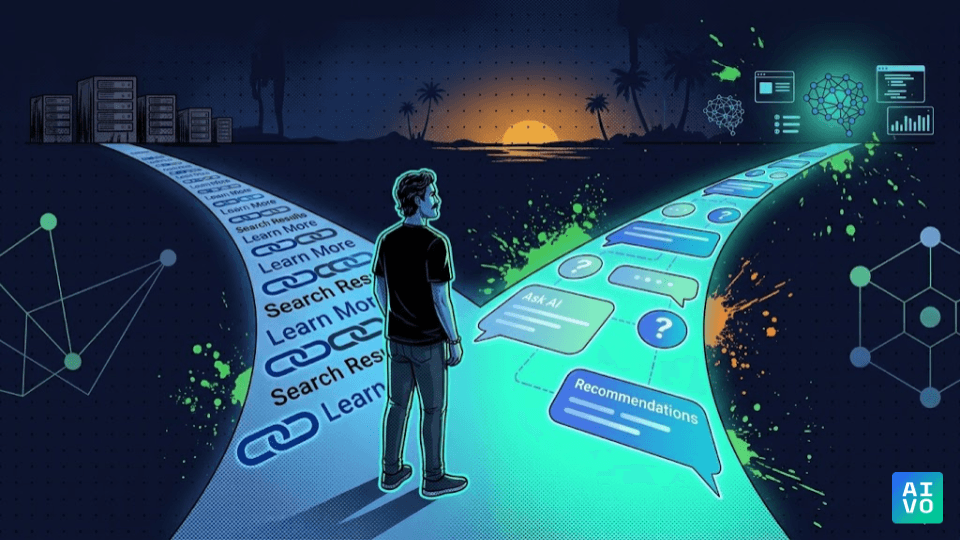
The AI shopping landscape changed fundamentally between November 2025 and March 2026.
When this post was first published, the question was which AI platform to prioritize for product discovery. That question still matters. But a second, more consequential question has emerged: is your brand ready for AI agents that don't just recommend products — they purchase them?
This is agentic commerce. It's not theoretical. Stripe's Agentic Commerce Protocol (ACP) launched with 850,000+ retailers. Google's Universal Commerce Protocol (UCP) went live for checkout with Etsy and Wayfair in February 2026. Shopify AI-driven orders grew 15x since January 2025. Amazon Rufus drove $12 billion in incremental sales in 2025.
The brands getting ahead aren't just optimizing for AI recommendations. They're building the infrastructure for AI-mediated purchasing — before the channel matures and the early advantage disappears.
Here's the complete picture for 2026, including what's new, what's changed, and where to focus.
---
📋 TL;DR (For E-commerce Decision-Makers)
The Platforms in 2026 (now four that matter):
- ChatGPT Shopping: 900M weekly active users, organic rankings, Shopify Instant Checkout, ACP directory integration
- Perplexity Shopping: Research-focused (15M+ users), highest conversion quality, direct checkout with select partners
- Amazon Rufus: 250M monthly users, $12B incremental 2025 sales, 3.5x conversion (5x on Black Friday), on-Amazon only
- Google AI Mode / Shopping Graph: UCP-enabled checkout live with Etsy and Wayfair (Feb 2026), AI Overviews driving 61% CTR decline for non-cited brands
- Agentic commerce protocols (ACP + UCP) are live — AI agents can now purchase autonomously
- 56% of consumers used AI during 2025 holiday shopping (up from 11% the prior year)
- AI-referred holiday traffic converted 31% higher than non-AI sources
- Only 14% of Americans are currently comfortable with fully autonomous AI purchasing — the trust gap is your preparation window
- YouTube doubled its AI citation share (19% → 39%) and now surpasses Reddit as the #2 AI citation source
- 41% of Gen Z expect to use AI shopping agents — brand readiness for agentic commerce matters now
- Fashion/Beauty: ChatGPT first, Perplexity second, Rufus for Amazon sellers
- Electronics/Tech: Perplexity first, ChatGPT second, Google AI Mode third
- Home Goods: ChatGPT first, Google AI Mode second (UCP-ready brands win here), Rufus third
- Specialty/Niche: Perplexity first, ChatGPT second
- Schema markup = 3–5x more likely to appear in AI recommendations
- ACP + UCP readiness now separate brands that get discovered from brands that capture the sale
- Average brand readiness score: 4.4/10 — most brands are unprepared
---
What Changed: The Agentic Commerce Shift
When this post was published in November 2025, AI shopping platforms were discovery channels — sophisticated recommendation engines that influenced purchase decisions but handed off the transaction to the merchant.
That's no longer the full picture.
By Q1 2026, the infrastructure for AI-mediated purchasing is live across multiple protocols:
Stripe's Agentic Commerce Protocol (ACP) launched as the first standardized framework for AI agents to complete purchases autonomously. Over 850,000 retailers are already listed in the ACP directory — including IKEA, which joined specifically because its direct-only model means it can't rely on marketplace distribution to reach AI shoppers. Retailers in the ACP directory make their products discoverable and purchasable through AI agents operating across ChatGPT, Google Gemini, Microsoft Copilot, and other platforms.
Google's Universal Commerce Protocol (UCP) went live for checkout in February 2026, co-developed with Wayfair, Target, Shopify, Etsy, and Walmart. Etsy and Wayfair were the first to launch live AI checkout through UCP. This means a shopper asking Google AI Mode for furniture recommendations can now purchase directly from Wayfair within the AI interface — no redirect, no lost session.
Shopify's AI-native product syndication automatically pushes merchant catalog data to AI platforms. Shopify reports that AI-driven orders have grown 15x since January 2025. For Shopify merchants, this isn't a manual integration — the AI channel is increasingly automatic.
The implication for e-commerce brands is significant: the gap between being discovered by AI and selling through AI is closing fast. Brands that have structured their product data, integrated with commerce protocols, and built AI citation authority will capture both layers. Brands that haven't will be visible but may lose the transaction to a competitor who is ready.
The trust gap is your preparation window. Only 14% of Americans are currently comfortable with AI placing orders entirely on their behalf (YouGov, December 2025). But 41% of Gen Z expect to use AI shopping agents — and 56% of all U.S. consumers used AI during 2025 holiday shopping, up from 11% the prior year. Trust is catching up to infrastructure. The brands that prepare now capture the channel as it matures.
---
What Are the AI Shopping Platforms in 2026?
Four platforms now define the AI shopping landscape. Each operates differently, attracts different users, and rewards different optimization strategies.
ChatGPT Shopping
Updated Scale (March 2026):
- 900 million weekly active users (up from 400 million in November 2025)
- Processes over 2.5 billion prompts per day
- 53%+ of U.S. shoppers use AI tools for product research (ChatGPT largest share)
- Conversational queries ("best noise-cancelling headphones under $150")
- Organic product cards with images, prices, specs, and reviews
- No sponsored placements — rankings based purely on relevance
- Instant Checkout via Shopify integration (1M+ Shopify merchants)
- ACP Directory integration for agentic purchasing
Merchant Access:
- Shopify merchants: Automatic via Checkout Kit, increasingly included in ACP
- Non-Shopify merchants: API integration (application-based)
- ACP Directory: Apply for listing to enable agentic purchasing
Perplexity Shopping
Updated Scale:
- 15M+ monthly active users (overall Perplexity, growing)
- 159.7 million monthly visits (March 2025 baseline)
- Consistently the highest-quality referral traffic in AI shopping
- Research-focused queries with citation transparency
- Direct checkout with select merchant partners (expanding)
- "Snap to Shop" visual search capability
- Explicit source links — users can verify every recommendation
User Behavior:
- Average session: 23 minutes (deep research)
- 4.64 pages per visit
- Desktop-dominant: 59.7% U.S. users
- Highest intent-to-convert ratio of any AI shopping platform
Amazon Rufus
Updated Scale (Q4 2025 Earnings Data):
- 250 million monthly active users
- $12 billion in incremental annual sales (2025 — up from $10B projection)
- 3.5x higher conversion vs. standard Amazon search (5x on Black Friday)
- On pace to handle 25–35% of Amazon searches by end 2026
- Integrated into Amazon's search bar and app
- Accesses Amazon's full catalog, customer reviews, and Q&A data
- Can answer hyper-specific questions from review content ("Are these individually wrapped?")
- On-Amazon only — will never recommend off-Amazon products
---
Google AI Mode / Shopping Graph
New Platform — Added for 2026
Google AI Mode and AI Overviews represent the fourth major AI shopping channel, and the one with the most significant reach due to Google's existing search dominance.
Scale:
- AI Overviews appear on a significant percentage of Google searches
- Google Shopping Graph indexes 35 billion products across retailers
- UCP checkout now live with Etsy and Wayfair (February 2026)
- AI Overviews surface product recommendations within search results
- Google AI Mode enables conversational shopping queries
- UCP enables direct checkout for participating retailers without leaving Google
- Cites YouTube heavily (18.2% of AI Overview citations outside top-100 results); Reddit at 21%
- Organic CTR drops 61% on queries where AI Overviews appear (Seer Interactive, September 2025)
- Brands cited in AI Overviews earn 35% more organic clicks and 91% more paid clicks than non-cited competitors
- Being absent from AI Overviews is now a direct commercial loss, not just a visibility gap
- Google Merchant Center integration (existing)
- UCP participation for checkout capability (application-based)
- Product schema + structured data for AI Overview inclusion
Platform Scale at a Glance
| Platform | Monthly Scale | Commerce Layer | Key Limitation |
|---|---|---|---|
| ChatGPT Shopping | 900M WAU | Instant Checkout + ACP | Non-Shopify needs API |
| Perplexity Shopping | 159.7M visits/mo | Direct checkout (select) | Smaller absolute volume |
| Amazon Rufus | 250M users | Native Amazon checkout | On-Amazon only |
| Google AI Mode | Billions (Google scale) | UCP checkout (expanding) | UCP still rolling out |
---
How Do Consumer Adoption Rates Compare?
The numbers have moved significantly since November 2025. The headline shift: AI shopping went from "growing rapidly" to "mainstream during the holidays."
Updated 2026 Adoption Data
Holiday Season 2025 (Synchrony, n=1,000 U.S. consumers):
- 56% of U.S. consumers used generative AI during 2025 holiday shopping
- Up from 11% the prior year — a 5x increase in one holiday cycle
- 41% of Gen Z expect to use AI shopping agents (not just AI recommendations)
- AI-referred traffic converted 31% higher than non-AI sources during the holiday season
- AI-driven revenue per visit grew 84% from January to July 2025
- AI-referred consumers spent 45% longer on websites and viewed 13% more pages
- 59% of Americans now use Gen AI tools for online shopping (discovery, research, recommendations)
- Up from 53% in February 2025
- 79% say AI makes them more confident in their purchases (Suzy, November 2025)
- 65% trust AI specifically for price comparison (YouGov, December 2025)
- 14% are comfortable with AI placing orders fully on their behalf — autonomous purchasing is a trust frontier
Platform-Specific Adoption (Updated)
ChatGPT Shopping:
- Base: 900M weekly active users (February 2026) — more than doubled from November 2025
- Shopping traffic grew 1,950% YoY on Cyber Monday 2024; 2025 holiday season reinforced the trend
- AI-referred shoppers: 8% higher engagement, 12% more pages, 23% lower bounce rate
- 15M+ monthly active users; 159.7M monthly visits (March 2025 baseline)
- +191.9% YoY visitor growth
- The highest research depth of any AI platform — average session 23 minutes
- 250 million monthly active users (up from initial rollout data)
- 13.7% of Amazon searches (growing toward 25–35% by end 2026)
- $12 billion in incremental sales in 2025 (Amazon Q4 earnings)
- 3.5x higher conversion vs. standard Amazon search; 5x on Black Friday
- AI Overviews appear on a significant share of Google searches
- 61% organic CTR decline for non-cited brands on affected queries
- UCP-enabled checkout launched February 2026 with Etsy and Wayfair
Platform-Specific Strengths and Limitations
ChatGPT Shopping: Mass Reach + Emerging Agentic Layer
Strengths:
- Massive and rapidly growing user base — 900M WAU and rising; widest reach of any AI platform
- Conversational discovery — natural language queries capture intent that keyword search misses
- Organic rankings (no sponsored placements yet) — smaller brands can compete with larger ones
- ACP integration — listed retailers are discoverable and purchasable by AI agents
- Shopify integration — Instant Checkout for 1M+ merchants with minimal setup
- Redirect-to-purchase for non-ACP/non-Shopify merchants (conversion friction)
- No Amazon product access — ChatGPT cannot recommend Amazon products
- Product catalog depth varies by merchant integration quality
---
Perplexity Shopping: Research Quality Wins
Strengths:
- Research-oriented users — 23-minute average sessions means serious purchase consideration
- Highest conversion quality — Perplexity-referred traffic consistently converts 50–70% higher than baseline
- Citation transparency — explicit source links drive qualified referral traffic
- Reddit-heavy sourcing (46.7% of citations) — community platform presence directly impacts visibility
- Smaller absolute user base — 15M+ monthly vs. ChatGPT's 900M WAU
- Desktop-heavy (59.7% U.S.) — limited mobile impulse purchase capture
- Research-to-purchase gap — users often research on Perplexity, buy on Amazon or brand site
---
Amazon Rufus: On-Amazon Commerce at Scale
Strengths:
- Massive scale with proven commercial impact — $12B in incremental 2025 sales
- 3.5x conversion advantage (5x on Black Friday) over standard Amazon search
- Native checkout — no redirect friction; seamless within Amazon ecosystem
- Zero integration required — all Amazon sellers are automatically included
- Hyper-specific Q&A answering — pulls from reviews and Q&As to answer detailed questions
- On-Amazon only — DTC brands without Amazon presence get zero benefit
- No customer relationship — Amazon owns the buyer; merchants get the sale but not the data
- Attribution opacity — no native way to distinguish Rufus-assisted from standard Amazon search
---
Google AI Mode / Shopping Graph: The Reach Layer
Strengths:
- Unmatched reach through Google's existing search dominance
- UCP checkout — live with Etsy and Wayfair (February 2026), expanding
- Shopping Graph — 35 billion products indexed
- 61% CTR penalty for non-cited brands on affected queries — absence has measurable commercial cost
- UCP still rolling out — checkout not universal yet
- Requires Google Merchant Center — product data must be properly structured
- YouTube and Reddit dominate its citation mix — brand-direct content is one of several inputs
---
Which Platform to Prioritize by Product Category
Fashion & Beauty Priority Matrix (Updated)
1st Priority: ChatGPT Shopping
- Conversational queries are natural for fashion ("trendy midi dress under $150 for a rooftop wedding")
- Organic rankings mean smaller DTC fashion brands can appear alongside major retailers
- ACP integration enables agentic repurchase for loyalty-driven categories (skincare routines, wardrobe essentials)
- 41% of consumers likely to use AI for clothing discovery
- AI Overviews appear on fashion-related search queries — being cited means 35% more organic clicks
- YouTube's rising citation share (39% of AI citations) makes creator content a strategic asset for fashion/beauty
- UCP checkout expansion will matter for fashion as it rolls out
- Premium/prestige beauty: Perplexity's research users are ideal for ingredient-conscious or skincare-intensive categories
- Desktop-heavy behavior suits deliberate beauty purchases
---
Electronics & Tech Priority Matrix (Updated)
1st Priority: Perplexity Shopping
- Specification-heavy research matches Perplexity's 23-minute desktop sessions
- Technical product comparisons align with Perplexity's citation model
- Highest conversion quality for high-consideration purchases
- Broad reach captures non-technical buyers ("best laptop for video editing")
- Use-case framing in product descriptions performs well in conversational queries
- Feature-specific queries ("best OLED monitor under $500") appear frequently in AI Overviews
- Schema markup for technical specs is high-leverage for AI inclusion
---
Home Goods Priority Matrix (Updated)
1st Priority: ChatGPT Shopping
- Conversational discovery is natural for home goods ("coffee table for a small apartment")
- ACP listing is especially valuable — home goods have high repeat purchase patterns
- Wayfair's UCP launch (February 2026) has reshaped this category — home goods is now the most active AI commerce category by transaction volume
- YouTube's rising citation share (39%) makes room design and product review videos critical for home goods visibility
- UCP readiness is a direct competitive advantage in this category right now
- Amazon dominates home goods — Rufus's $12B in sales skews heavily toward home categories
- Critical for any brand with Amazon home goods presence
Specialty & Niche Products Priority Matrix
1st Priority: Perplexity Shopping
- Research-heavy buyers and long purchase cycles match Perplexity's deep-session behavior
- Specialty products benefit from citation transparency — buyers verify claims
- Growing category coverage; conversational queries work for education ("best camera for wildlife photography beginners")
- Specialty searches often trigger AI Overviews — structured content performs well
Platform Priority Summary
| Category | 1st Priority | 2nd Priority | 3rd Priority |
|---|---|---|---|
| Fashion / Beauty | ChatGPT | Google AI Mode | Perplexity |
| Electronics / Tech | Perplexity | ChatGPT | Google AI Mode |
| Home Goods | ChatGPT | Google AI Mode / UCP | Rufus (if Amazon) |
| Specialty / Niche | Perplexity | ChatGPT | Google AI Mode |
Note on Amazon Rufus: Rufus priority moves to "1st or 2nd" for any brand deriving 30%+ of revenue from Amazon. Rufus is irrelevant for brands without Amazon marketplace presence — do not allocate budget here if you're DTC-only.
---
AI Commerce Readiness: The New Imperative
This section didn't exist in the November 2025 version of this post. It now leads every strategic conversation about AI shopping platforms.
The distinction between AI Discovery and AI Commerce is becoming the central strategic divide in e-commerce:
- AI Discovery: AI recommends your products. Users click through to your site or Amazon to purchase. Your brand needs citations and content authority.
- AI Commerce: AI agents find, select, and purchase on the user's behalf. Your brand needs protocol integration, machine-readable product data, and agentic compatibility.
The Commerce Protocols You Need to Know
Agentic Commerce Protocol (ACP) — Stripe + OpenAI
- Launched 2025–2026 with 850,000+ retailers listed in the ACP directory
- Enables AI agents across ChatGPT, Google Gemini, Microsoft Copilot, and others to complete purchases autonomously
- IKEA joined specifically because its DTC-only model means it can't rely on marketplace aggregation — every AI platform must have direct integration
- To participate: apply for ACP directory listing, ensure your checkout is ACP-compatible, and provide machine-readable product data
- Co-developed with Wayfair, Target, Shopify, Etsy, Walmart
- Live for checkout with Etsy and Wayfair (February 2026)
- Enables AI Mode purchase completion without leaving Google
- Particularly significant for home goods, where Wayfair's UCP launch has created a new competitive dynamic
- To participate: Google Merchant Center + UCP application; Shopify merchants have built-in eligibility
- Shopify now automatically syndicates merchant product data to AI platforms
- AI-driven orders grew 15x since January 2025 for Shopify merchants
- If you're on Shopify, your catalog is increasingly available to AI agents by default
- Copilot shopping integration enables purchasing through Microsoft's AI ecosystem
- Embedded in Windows, Edge, and Microsoft 365 — reaches a significant enterprise and desktop audience
- Particularly relevant for electronics, productivity tools, and professional products
What AI Commerce Readiness Requires
The average brand readiness score across e-commerce is currently 4.4 out of 10. Most brands are not ready for AI agents to transact on their behalf. Here's what readiness actually requires:
1. Product Schema Markup Products with comprehensive schema markup appear in AI recommendations 3–5x more frequently than those without. This is both a discovery signal (AI can understand your product) and a commerce signal (AI agents can read machine-structured data to complete purchases). At minimum: Product, Offer, Review, and BreadcrumbList schema on every product page.
2. Inventory Accuracy 65% inventory accuracy — the average for brands without real-time sync — is insufficient for AI agents. If an agent attempts to purchase a product and finds it out of stock, it will recommend a competitor's product instead. Real-time inventory sync is table stakes for agentic commerce.
3. llms.txt Analogous to robots.txt but for AI crawlers. An llms.txt file tells AI platforms which content is most important for understanding your products and brand — prioritizing product descriptions, specifications, pricing, and availability. Missing llms.txt means AI crawlers make less efficient decisions about what to index.
4. Structured Product Data Feeds ACP, UCP, and AI platform integrations all consume structured product data. The format requirements vary by platform but share common elements: clean product titles, complete specifications, accurate pricing, variant data, and real-time availability. A single high-quality product data feed that feeds into multiple integrations is the foundation.
5. Protocol Integration Actually being listed in ACP (Stripe/OpenAI), registered with UCP (Google), and connected to Shopify's AI syndication. These are separate registrations/applications — being on one doesn't mean you're on all.
The DTC vs. Marketplace Dynamic
Marketplace brands (those selling on Amazon, Wayfair, etc.) have an automatic advantage: when marketplace platforms integrate with ACP or UCP, every brand listed on that marketplace gets included. Amazon's Rufus, for example, serves 250M monthly users with zero additional integration for sellers.
Direct-to-consumer brands selling exclusively through their own properties must build each integration directly. This was IKEA's explicit reason for joining the ACP directory — its DTC-only model means it cannot passively benefit from marketplace aggregation. The cost of owning the customer relationship is the need to actively integrate with every AI commerce protocol.
For DTC brands: AI commerce readiness is more urgent, not less. Your marketplace-distributed competitors are automatically getting agentic discoverability through their retail channels. You have to build it yourself.
---
Merchant Integration Requirements (Updated)
ChatGPT Shopping + ACP
For Shopify Merchants (Easiest Path):
- Active Shopify store → Checkout Kit → Automatic Shopify AI syndication
- ACP integration via Shopify's built-in eligibility
- Timeline: Verify configuration and apply for ACP listing; 2–4 weeks to go live
- Apply for ChatGPT Shopping via OpenAI merchant onboarding
- Develop API integration (2–6 weeks)
- Separately apply for ACP directory listing
- Timeline: 6–12 weeks total; cost: $5K–25K development + transaction fees
Perplexity Shopping
Via BigCommerce/Feedonomics: Dashboard integration; 1–2 weeks. Included with platform subscription.
Via Direct API: Apply for Merchant Hub access; develop API integration. Timeline: 4–8 weeks; cost: $8K–20K.
Community Platform Presence (Perplexity-specific): Since Reddit accounts for 46.7% of Perplexity's top citations, building legitimate brand presence in relevant Reddit communities is now part of Perplexity optimization — not a nice-to-have.
Amazon Rufus
Zero integration for Amazon sellers — Rufus accesses all Amazon listings automatically.
Optimization priority (immediate impact):
- Comprehensive bullet points that answer common questions
- A+ Content (55.1% of Rufus-recommended products use A+ or A+ Premium)
- FAQ section built for conversational queries ("Is this dishwasher-safe?" "Does this come assembled?")
- Customer reviews mentioning specific attributes Rufus reads for answers
- Backend keywords structured for question-format queries
Google AI Mode / Shopping Graph
Via Google Merchant Center: Required foundation. Ensure product data is complete, accurate, and updated.
For UCP checkout (expanding): Application-based. Shopify and Google have simplified eligibility for Shopify merchants.
Schema markup: Product, Offer, and Review schema required for AI Overview inclusion. This is the highest-leverage technical action for Google AI Mode visibility.
Integration Priority Ranking (Updated)
- Amazon Rufus (if you sell on Amazon): Zero integration, optimization only — start today
- ChatGPT Shopping (Shopify merchants): Automatic via Checkout Kit — verify and apply for ACP
- Google AI Mode (all brands): Google Merchant Center + schema markup — foundational
- Perplexity (BigCommerce/Feedonomics): Dashboard integration — 1–2 weeks
- ChatGPT Shopping (non-Shopify): Custom API development — 6–12 weeks
- UCP (Google direct checkout): Application-based, expanding — priority for home goods brands
Budget Allocation Across Platforms
Updated Allocation Framework
The addition of Google AI Mode as a fourth priority platform and the emergence of AI commerce readiness as a distinct investment area changes the budget picture from November 2025.
Four-Platform Approach ($20K–35K Monthly)
- Primary platform: 45% ($9K–15.75K)
- Secondary platform: 25% ($5K–8.75K)
- Third platform: 20% ($4K–7K)
- AI Commerce Readiness (one-time + ongoing): 10% ($2K–3.5K)
- Primary platform: 50% ($6K–10K)
- Secondary platform: 30% ($3.6K–6K)
- AI Commerce Readiness (schema, llms.txt, protocol integration): 20% ($2.4K–4K)
- Note: Google AI Mode schema + Merchant Center setup should be included in commerce readiness regardless of which platform you choose as "primary" — it's foundational
- 70% to primary platform ($3.5K–8.4K)
- 30% to AI Commerce Readiness ($1.5K–3.6K)
- Google AI Mode schema as part of commerce readiness — low incremental cost, high leverage
What Not to Do (Updated)
❌ Ignore AI Commerce Readiness to maximize platform optimization budget The 3–5x AI recommendation uplift from schema markup alone means commerce readiness investment typically outperforms additional platform-specific spend at the margin.
❌ Optimize for Rufus without Amazon presence Still true from November 2025: Rufus is irrelevant for DTC-only brands.
❌ Treat Google AI Mode as optional A 61% organic CTR decline on affected queries makes Google AI Mode a defensive necessity, not an offensive choice. Even a minimal investment in schema markup and Merchant Center optimization protects existing traffic.
❌ Delay ACP/UCP registration Both protocols have application queues. Starting the registration process now means being positioned to capture AI-agent transactions as agentic commerce comfort grows.
---
Attribution Challenges
Attribution remains imperfect across all AI shopping platforms. Three developments since November 2025 have improved — but not solved — the measurement problem.
What's Changed in Attribution (Updated)
Better: Adobe Analytics and Seer Interactive have published more robust AI traffic quality data. The 31% conversion premium for AI-referred holiday traffic (Adobe, 2025) gives brands a benchmark for evaluating AI-referred sessions.
Still Difficult: The research-to-purchase gap — where a consumer researches on Perplexity or ChatGPT then purchases on Amazon or directly — means last-click attribution systematically undercounts AI's influence.
New Challenge — Agentic Attribution: When an AI agent completes a purchase, the transaction may appear as direct or API traffic in analytics, with no referral attribution. This is an emerging gap that no analytics platform has fully solved.
Practical Attribution Approaches
1. Referral Traffic Quality Benchmarking
Track chat.openai.com and perplexity.ai referrals in GA4. Expect 30–50% higher conversion rates compared to organic. If you see these rates, AI attribution is outperforming its volume share.
2. Branded Search Volume Correlation AI citations drive branded search. Track branded query volume in Google Search Console against your AI visibility optimization activities. Correlation over 60–90 days is a reliable proxy signal.
3. Post-Purchase Surveys Add "How did you first hear about [Product]?" to confirmation emails. Self-reported AI influence typically runs 25–40% for brands with active AI visibility.
4. Agentic Transaction Tracking For ACP/UCP integrations, implement order tagging at the API level to distinguish agent-initiated from human-initiated transactions. This is a new capability — consult your platform's API documentation for implementation.
5. AI Visibility Monitoring Track your citation rate across platforms as a leading indicator. AIVO's platform monitors mention frequency, share of model (how often you're recommended vs. competitors), and position across ChatGPT, Perplexity, Google AI Mode, and Claude.
---
FAQ
Q: How does agentic commerce change my optimization strategy?
A: Agentic commerce adds a second optimization layer on top of AI discovery. For discovery, you need content authority, citation ecosystem presence (editorial, Reddit, YouTube), and structured product data so AI can understand what you sell. For agentic commerce, you additionally need protocol integration (ACP, UCP, Shopify AI syndication), real-time inventory sync, machine-readable checkout flows, and product schema that AI agents can parse to complete transactions. The good news: the discovery optimization (structured data, schema markup) is foundational for both layers — you don't need to rebuild from scratch.
Q: Should I optimize for all four platforms simultaneously?
A: Focus on 2–3 platforms initially, then expand. The one always-on recommendation: Google AI Mode schema markup should be implemented regardless of your primary platform strategy — it's foundational and protects existing search traffic from the 61% CTR penalty on AI Overview queries. For your active investment, choose based on your infrastructure: Shopify merchants should prioritize ChatGPT (automatic integration); Amazon sellers should prioritize Rufus (zero integration); DTC tech/specialty brands should prioritize Perplexity; and home goods brands should fast-track Google AI Mode + UCP given Wayfair's February 2026 launch.
Q: Is Amazon Rufus still relevant if I'm not heavily Amazon-dependent?
A: If you sell on Amazon at all, Rufus is relevant — and the $12B in 2025 incremental sales makes optimization a clear priority for Amazon sellers. If you sell exclusively through your own DTC channels with no Amazon presence, Rufus is not relevant. However, the commercial success of Rufus ($12B, 250M users, 3.5x conversion) reinforces a broader strategic point: AI-mediated purchasing is commercially validated at scale. The implication for DTC brands is to prioritize ChatGPT (ACP) and Google AI Mode (UCP) as the equivalent channels where DTC brands can compete directly.
Q: How does agentic commerce affect the consumer journey for considered purchases?
A: Agentic commerce is currently most active for reorder/replenishment purchases (where trust and preference are already established) rather than high-consideration first purchases. The 14% of Americans comfortable with autonomous purchasing represents early adopters who are most likely using AI agents for categories they understand well. For considered purchases (furniture, electronics, premium DTC), the current pattern is AI-assisted research with human-completed transaction. As trust grows — particularly among the 41% of Gen Z expecting to use AI shopping agents — more considered purchases will move through agentic channels. Your strategy should be ready for this transition, not waiting for it to arrive.
Q: What is the ACP directory and how do I get listed?
A: The Agentic Commerce Protocol (ACP) directory is a registry of retailers whose products are discoverable and purchasable by AI agents across platforms including ChatGPT, Google Gemini, and Microsoft Copilot. 850,000+ retailers are currently listed. To get listed: (1) ensure your checkout infrastructure is compatible with ACP payment flows (Stripe powers the protocol), (2) submit your product catalog via the ACP integration, and (3) apply for directory listing. For Shopify merchants, Shopify's ACP integration simplifies this considerably. For non-Shopify merchants, consult Stripe's ACP documentation or an integration partner. Being listed doesn't guarantee AI agent purchases, but not being listed guarantees you won't get them.
Q: How do conversion rates compare across the four platforms?
A: Conversion benchmarks from recent data: Amazon Rufus delivers 3.5x conversion vs. standard Amazon search (5x on Black Friday); Perplexity-referred traffic typically converts 50–70% above baseline (research-intensive sessions); ChatGPT-referred traffic converts 30–45% above baseline; Google AI Mode-cited brands earn 35% more organic clicks and 91% more paid clicks than non-cited competitors on the same queries. Note: these are directional benchmarks. Your specific numbers depend on product category, price point, and how well your product content is optimized for each platform's recommendation signals.
Q: Will these platforms introduce advertising that changes the strategy?
A: Yes. ChatGPT Shopping currently maintains organic-only rankings but OpenAI has indicated it's exploring affiliate and premium placement models. Perplexity has rolled out sponsored sections in select markets. Google AI Mode already integrates Shopping Ads adjacent to AI responses. The strategic implication: brands establishing organic citation authority now will have lower paid amplification costs when ads launch — similar to how strong organic rankings reduce PPC requirements in traditional search. The organic window is valuable and finite.
Q: How long does it take to see results from AI shopping platform optimization?
A: Updated timeline from 2026 data: Google AI Mode schema markup shows impact in 30–60 days (crawl and re-index cycles). ChatGPT Shopping referral traffic becomes measurable by day 60–90 of active optimization. Amazon Rufus improvements from listing optimization appear within 7–14 days. Perplexity citation development takes 45–60 days. ACP/UCP protocol readiness: registration takes 2–8 weeks; measurable agentic transaction volume depends on category and consumer adoption trajectory. Full AI traffic contribution (15–25% of referral traffic from AI platforms) typically requires 90–150 days across all platforms as citation patterns establish and compound.
---
Key Takeaways
The Platform Landscape Has Expanded Four AI shopping platforms now define e-commerce AI visibility: ChatGPT Shopping (900M WAU, ACP-integrated, Shopify Instant Checkout), Perplexity Shopping (highest conversion quality, Reddit-heavy citation), Amazon Rufus (250M users, $12B 2025 sales, 3.5x conversion), and Google AI Mode (UCP checkout live, 61% CTR penalty for non-cited brands). Ignoring any of the four creates measurable gaps.
Agentic Commerce Is Live — Preparation Window Is Now ACP (850,000+ retailers), UCP (Etsy and Wayfair live in February 2026), and Shopify AI syndication (15x order growth) represent operational agentic commerce infrastructure. Only 14% of consumers are currently comfortable with fully autonomous purchasing — but that number is growing, particularly among Gen Z. The brands that build readiness now capture the channel as trust catches up.
AI Commerce Readiness Is the New Competitive Divide Average brand readiness is 4.4/10. Products with comprehensive schema markup appear in AI recommendations 3–5x more often. Real-time inventory sync, llms.txt, structured data feeds, and protocol integration (ACP/UCP) separate brands that get discovered from brands that capture the transaction.
Discovery Performance Has Raised the Stakes 56% of U.S. consumers used AI during 2025 holiday shopping (up from 11% the prior year). AI-referred traffic converted 31% higher than non-AI sources. Brands cited in AI Overviews earn 91% more paid clicks. The commercial impact of AI visibility is now measurable and significant — not hypothetical.
Platform Priority Shifts for Home Goods Wayfair's UCP launch (February 2026) makes Google AI Mode + UCP readiness the second-priority platform for home goods brands, ahead of where it ranked in November 2025. Home goods is now the most commercially active AI commerce category by deployed infrastructure.
DTC Brands Face Asymmetric Pressure Marketplace-distributed competitors get automatic AI discoverability through their retail channels (Amazon Rufus, UCP-integrated marketplaces). DTC-only brands must build each integration directly. The cost of controlling the customer relationship is the need to proactively build AI commerce infrastructure — ACP listing, UCP application, schema completeness — while marketplace brands get it passively.
YouTube Is Now as Important as Reddit YouTube doubled its AI citation share from 19% to 39% between August and December 2025, surpassing Reddit as the #2 AI citation source for Google AI Mode. For home goods, fashion, and beauty brands especially, YouTube creator content is now a primary AI visibility asset — not a supplementary channel.
Start Here: Get your free AI Visibility Snapshot to see how your brand currently appears across ChatGPT, Perplexity, Google AI Mode, and Claude. Takes 2 minutes, no credit card required.
---
Related Resources
AIVO Resources:
- The GEO Data Nobody's Talking About (March 2026) — Why 80% of LLM citations don't rank in Google's top 100
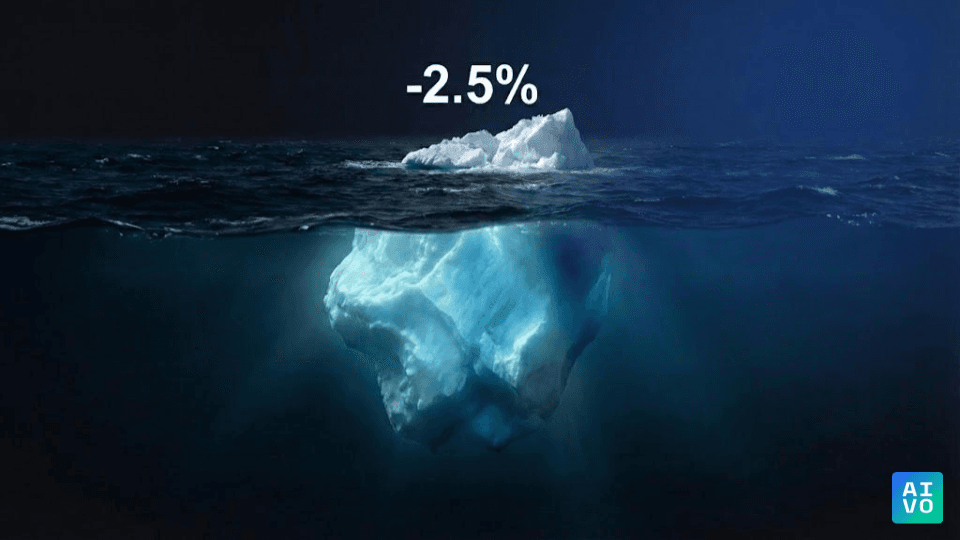
- Zero-Click Crisis Analysis — Understanding AI-driven traffic shifts for e-commerce
- How AI Engines Decide What to Cite — Platform-specific citation behavior and what it means for your content
- The AIVO System — Our methodology for building AI visibility as a managed channel
- Stripe Agentic Commerce Protocol — ACP technical documentation
- Adobe Digital Economy Index — AI shopping traffic and conversion data
- Google Universal Commerce Protocol — UCP merchant information
Sources
- Stripe / OpenAI, ACP Directory — 850,000+ retailers (2026)
- Google, Universal Commerce Protocol launch with Etsy and Wayfair — February 2026
- Shopify, AI-driven orders growth (15x since January 2025) — Early 2026
- Amazon Q4 2025 Earnings — Rufus $12B incremental sales; 250M monthly users
- Sensor Tower / Amazon analysis — Rufus 3.5x conversion; 5x Black Friday conversion (November 2025)
- Synchrony, n=1,000 U.S. consumers — 56% used AI during 2025 holiday shopping; 41% Gen Z expect to use AI agents (October–December 2025)
- Adobe Analytics, 1 trillion+ U.S. retail site visits — 31% higher AI-referred conversion; 84% revenue per visit growth; 45% longer sessions (November–December 2025)
- Omnisend/Cint, n=1,224 U.S. consumers — 59% use Gen AI for shopping (August 2025)
- Suzy, n=1,600 U.S. adults — 79% say AI makes them more confident in purchases (November 2025)
- YouGov, n=1,287 U.S. adults — 14% comfortable with autonomous AI purchasing; 65% trust AI for price comparison (December 2025)
- Seer Interactive — 61% organic CTR decline with AI Overviews; 35% more organic clicks and 91% more paid clicks for cited brands (September 2025)
- Superlines, corroborated by Adweek — YouTube citation share doubled from 19% to 39% (August→December 2025)
- Multiple sources (Passionfruit, eFulfillmentService, Recomaze) — 3–5x AI recommendation frequency for products with schema markup (Early 2026)
- Gartner — 20% of transactions projected through AI platforms by 2030 (2025 prediction)
- Adobe Analytics, Cyber Monday 2024 — 1,950% YoY growth in Gen AI shopping traffic
About This Analysis
This post was originally published November 24, 2025 and updated March 4, 2026 to reflect the emergence of agentic commerce protocols (ACP and UCP), updated platform statistics from Q4 2025 and early 2026 earnings data, and the expanded AI shopping landscape with Google AI Mode as a fourth major platform.
Disclosure: AIVO provides AI product discovery and visibility strategy for e-commerce brands across ChatGPT, Perplexity, Amazon Rufus, and Google AI Mode as part of our Assessment, Managed Retainer, and Partnership Engine Build services. Platform recommendations are based on product category, merchant infrastructure, and business model — not on platform preference.
| Last Updated: March 4, 2026 | Originally Published: November 24, 2025 | Next Review: June 2026 |